
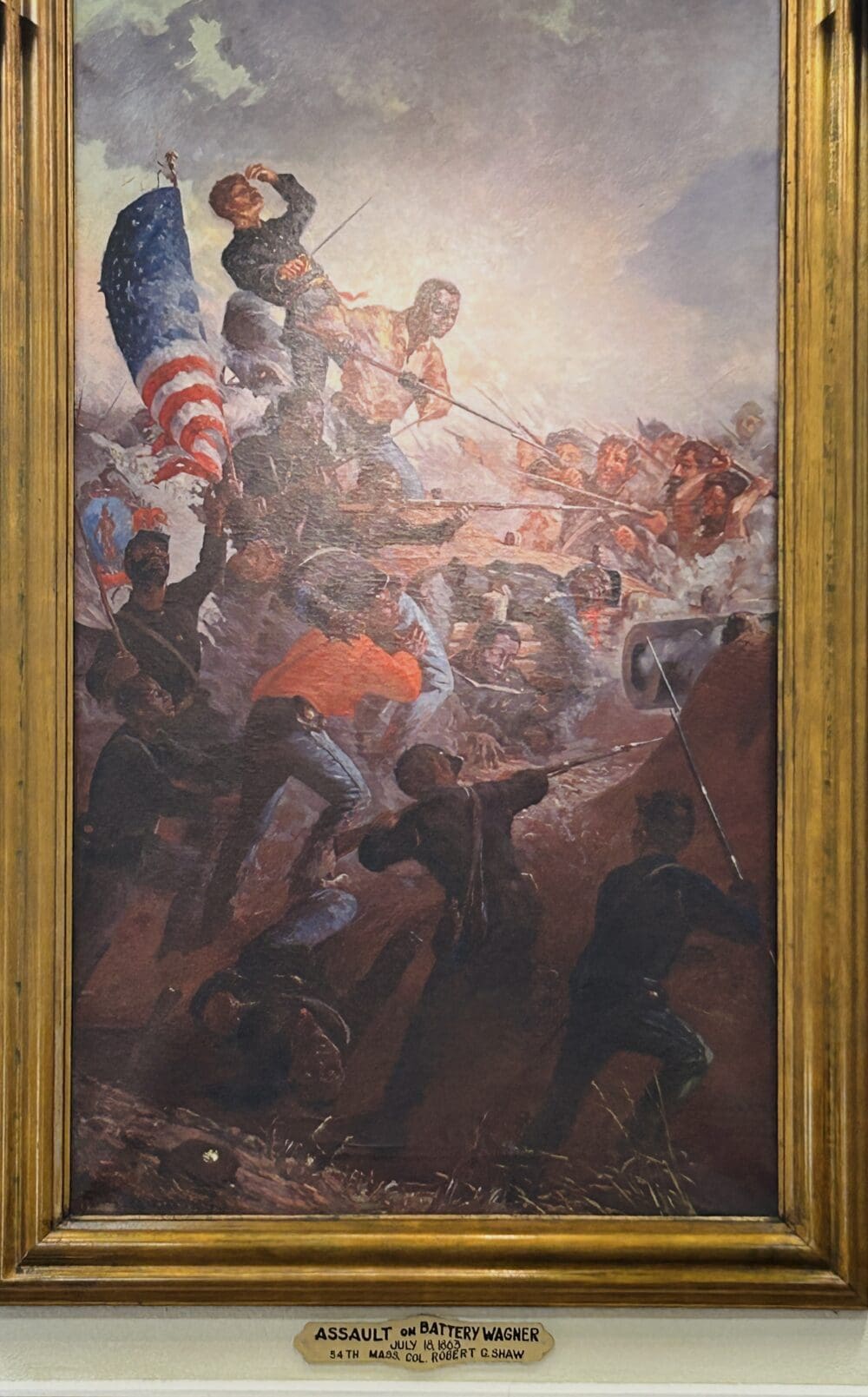
Brockton City Hall was conceived as a Civil War memorial. In keeping with this purpose, it was designed to include a monumental corridor displaying a series of paintings commemorating key battles of the war, some of which depict local men. The painting at the far west end of the corridor portrays the 54th Massachusetts Infantry Regiment in the Battle of Fort Wagner.
The 54th Massachusetts Infantry Regiment was one of the first official African American units in the United States Army during the Civil War. Formed in 1863, the regiment became a powerful symbol of courage, sacrifice, and the struggle for equality in the face of deep racial prejudice. Despite being paid less and subjected to discrimination, its soldiers proved their bravery in combat, most notably during the assault on Fort Wagner in South Carolina, depicted in this painting. Led by Colonel Shaw and outnumbered four to one by Confederate forces, the regiment suffered heavy losses, including Colonel Shaw, and ultimately lost the battle, but earned lasting national respect. Their service helped shift public opinion and paved the way for thousands of Black soldiers to join the Union Army.
A close inspection of the painting reveals many small but meaningful details. On the far left, centered vertically, is the emblem of the Massachusetts state flag. The tangled mass of bodies, some dead, some alive, captures the chaos and brutality of war. The highest point of the painting features Colonel Shaw at the moment he is shot and killed. On the right side of the painting, Confederate soldiers can be seen fighting against the advancing regiment, emphasizing the intensity of the conflict.
Brockton resident, Lemuel Ashport, was a member of the 54th and went on the become the first black police officer in Brockton. Ashport will be profiled in an upcoming post.
As Brockton celebrates Black History Month, we remember and honor the men of the 54th Massachusetts Infantry Regiment who, in the face of racial discrimination, courageously fought for the ideals of freedom and equality, helping to pave the way for the rights and opportunities we share today.